
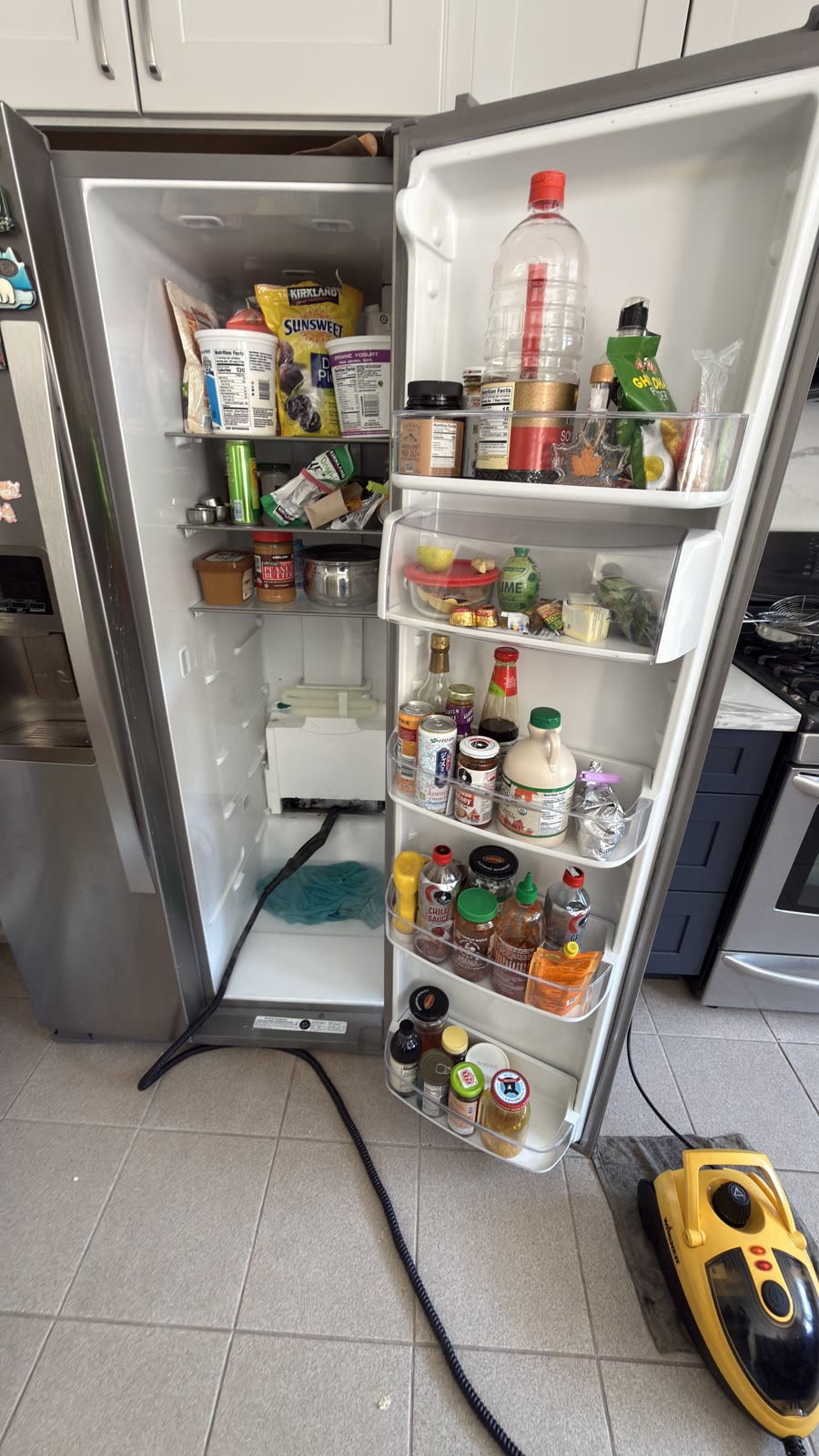
Repair Summary
- City
- Livermore, California
- Appliance
- Kenmore Coldspot side-by-side refrigerator, model 106.4651773510, serial HRX2592463
- Problem
- Refrigerator was noisy and the fresh-food compartment was not cooling; measured temperature was about 50°F
- Diagnosis
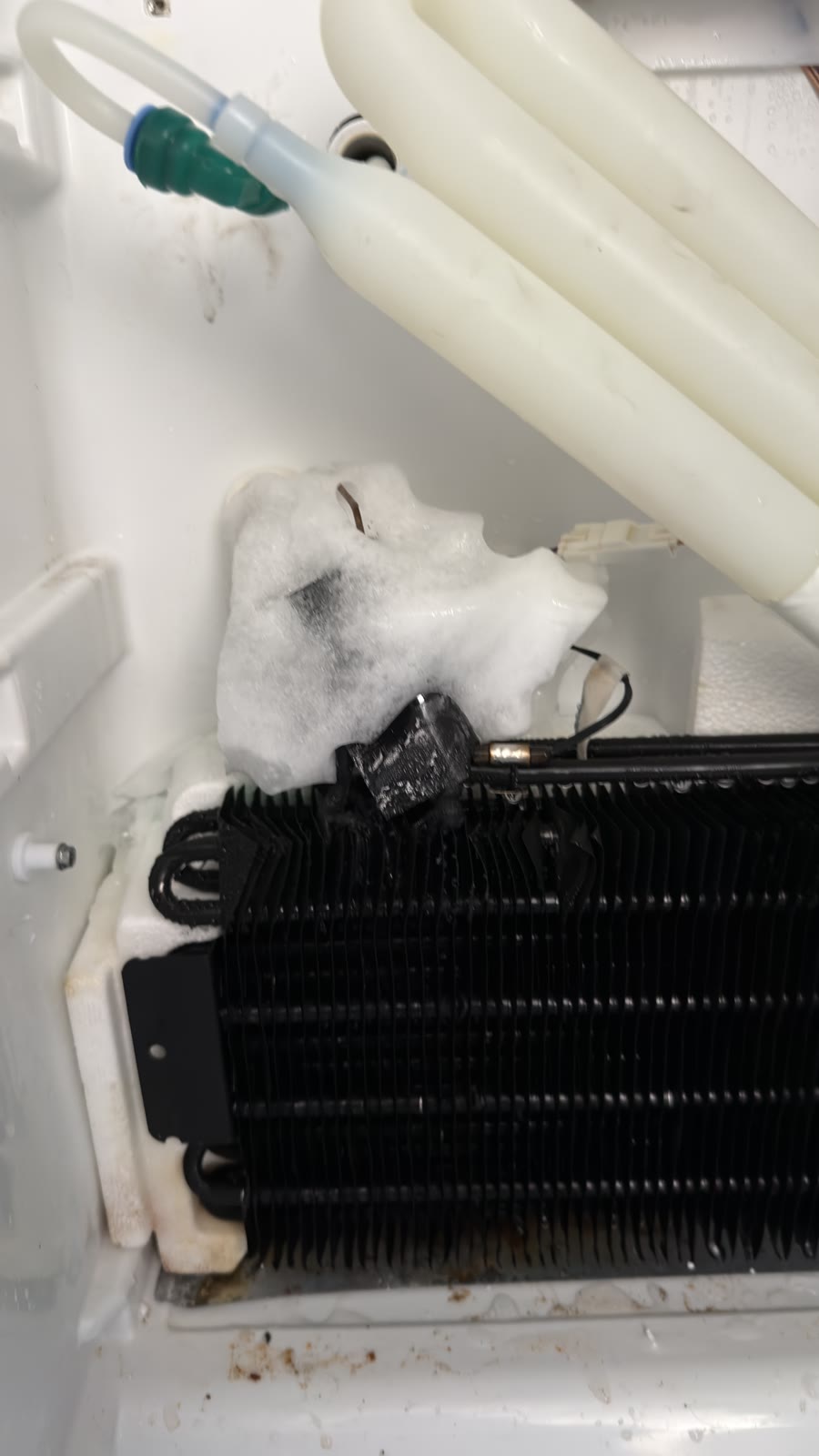
- Heavy frost and ice buildup restricted airflow through the evaporator area and affected normal fan operation
- Result
- Fresh-food temperature returned to 36°F and the refrigerator resumed normal cooling and operation
A Livermore homeowner called us because a Kenmore Coldspot side-by-side refrigerator was making unusual noise and was no longer keeping the fresh-food section cold. The compartment temperature had climbed to about 50°F, well above the safe target range. During the same visit, we found extensive ice around the evaporator and airflow components, completed a full defrost repair, replaced the failed electrical and airflow parts, and performed preventive maintenance.
Repair Summary
- Location: Livermore, California
- Appliance: Kenmore Coldspot side-by-side refrigerator, model 106.4651773510, serial HRX2592463
- Customer complaint: Refrigerator was noisy and the fresh-food compartment was not cooling; measured temperature was about 50°F
- Diagnosis: Heavy frost and ice buildup restricted airflow through the evaporator area and affected normal fan operation
- Repair performed: Refrigerator fully defrosted; main power/control board, temperature sensor W10316760, and evaporator fan/air-channel assembly W10300483 replaced; drain line thawed and cleared; condenser coil cleaned
- Result: Fresh-food temperature returned to 36°F and the refrigerator resumed normal cooling and operation

Customer Complaint: Noise and a 50°F Fresh-Food Compartment
The customer reported two symptoms: the refrigerator had become noisy and food was no longer staying cold. A fresh-food temperature near 50°F confirmed that this was more than a sound concern. A refrigerator should normally maintain approximately 36°F to 40°F in the fresh-food section. When temperatures remain higher, perishable food can spoil and the compressor may run longer while trying to compensate for poor airflow.

Diagnosis: Heavy Ice Restricted Evaporator Airflow
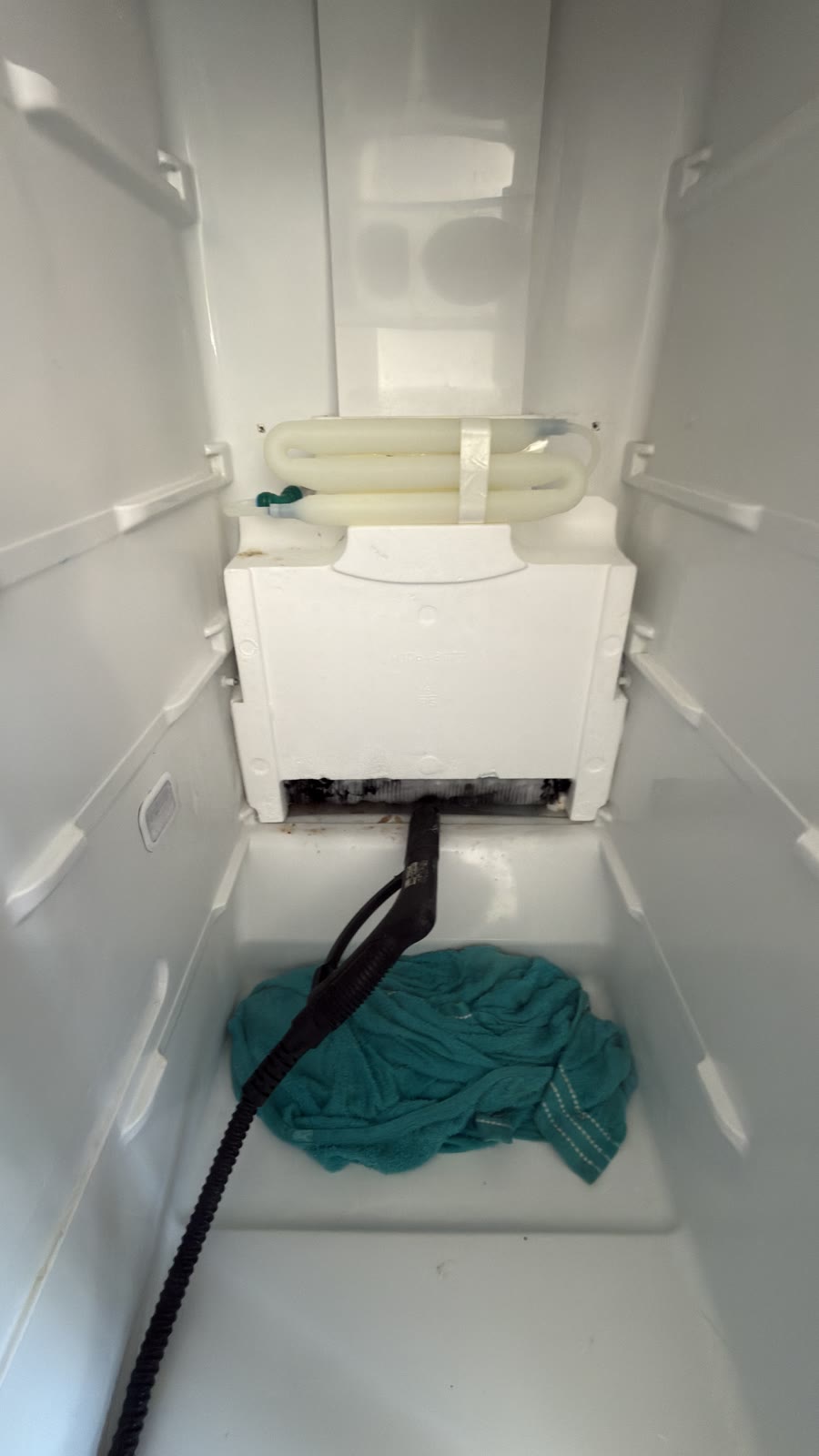
After opening the evaporator section, we found substantial frost and solid ice around the coil, sensor area, and fan housing. The evaporator fan must move cold air through the refrigerator. When ice blocks that path, the fresh-food compartment warms even if the sealed refrigeration system continues operating. Ice can also contact or overload the fan assembly, creating abnormal noise.
Repair Performed
Because the customer wanted the refrigerator restored in one service visit, we completed the full repair instead of performing only a temporary thaw. The work included:
- Removing food-zone components and opening the evaporator compartment.
- Carefully melting and removing the accumulated ice without damaging the evaporator tubing.
- Thawing and clearing the drain line so defrost water could flow to the drain pan.
- Replacing the main power/control board.
- Replacing temperature sensor part W10316760.
- Replacing the evaporator fan motor and insulated air-channel assembly marked W10300483.
- Reassembling the airflow section and checking wiring and connections.
- Cleaning dust from the rear condenser coil as part of full refrigerator maintenance.


Why a Full Defrost Repair Matters
Simply unplugging an iced refrigerator may restore cooling for a short time, but it does not correct the condition that allowed the ice to return. A lasting repair requires checking the sensor, control, fan, drain path, and physical airflow channel. In this case, replacing the affected components and clearing the drain line addressed both the temperature problem and the abnormal operating noise.
Cleaning the condenser coil was also important. Dust on the condenser reduces heat transfer and makes the compressor work harder. Periodic coil cleaning can improve efficiency and reduce unnecessary stress on the cooling system.
Result: Cooling Restored to 36°F
After reassembly and testing, the fresh-food temperature dropped from approximately 50°F to 36°F. Airflow was restored, the refrigerator returned to normal cooling, and the customer no longer had the combination of excessive noise and warm food storage.
If your refrigerator is noisy, heavily frosted, or not cooling correctly, do not wait for food temperatures to rise further. Schedule refrigerator repair in Livermore, review our Livermore appliance repair services, or learn more about our refrigerator repair service.
Need refrigerator repair? Book service online or call (510) 999-6091.
Schedule appliance repair today
Send us your appliance brand, symptom and city. We will help you find the next available appointment.